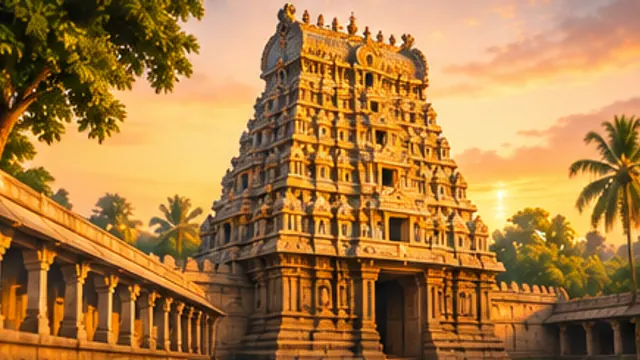
Set on the Seshachalam hills above Tirupati, this is one of the most visited pilgrimage centres in the world. Inscriptions record patronage by Pallava, Chola, Pandya and Vijayanagara rulers, and the shrine is managed today by the Tirumala Tirupati Devasthanams (TTD), a statutory trust.
Srikalahasteeswara Temple
శ్రీకాళహస్తీశ్వర ఆలయం
Srikalahasti, Tirupati district
Deity: Srikalahasteeswara (Shiva) as the Vayu Linga, with Gnana Prasunambika (Parvati)
Festivals: Maha Shivaratri Brahmotsavam
Read moreShow less
Counted among the five Pancha Bhuta shrines of Shiva, where he is worshipped as the element of air. The main structure is credited to Chola rulers in the 11th century, and the great gopuram and hundred-pillared hall were added under the Vijayanagara king Krishnadevaraya in 1516; the gopuram collapsed in 2010 and was rebuilt.
Jyotisha connection: Widely known for the Rahu-Ketu puja, which devotees perform seeking relief from the astrological influence of the lunar nodes. The temple is also noted for remaining open for worship during solar and lunar eclipses, when most temples close.
Bhramaramba Mallikarjuna Temple, Srisailam
శ్రీశైలం మల్లికార్జున ఆలయం
Srisailam, Nandyal district
Deity: Mallikarjuna (Shiva) and Bhramaramba (Parvati)
Festivals: Maha Shivaratri, Ugadi
Read moreShow less
Standing on the Nallamala hills above the Krishna river, Srisailam is revered as one of the twelve Jyotirlingas of Shiva and also as a Shakti Peetha of the goddess. Its antiquity is traditionally placed very early, and the present walled complex reflects building by several dynasties including the Vijayanagara and Reddi kings.
Arunachal Pradesh
State
Parshuram Kund
Lohit district, near Tezu
Deity: Parashurama, the sixth avatar of Vishnu
Festivals: Makar Sankranti holy dip and fair
Read moreShow less
On the lower Lohit river, this pool is linked to the story of Parashurama, whose axe is said to have come free from his hand only when he washed it here after obeying his father's command against his mother Renuka. The original kund was buried by the 1950 Assam earthquake, and a new pool formed by boulders is now used.
Tawang Monastery (Gaden Namgyal Lhatse)
Tawang · Buddhist
Deity: Monastery of the Gelug school of Tibetan Buddhism
Festivals: Losar, Torgya, Choksar
Read moreShow less
Founded in 1680-81 by Merak Lama Lodre Gyatso at the wish of the 5th Dalai Lama, it is described as the largest Buddhist monastery in India. The walled complex includes dozens of residential buildings and a library of Kangyur and Tengyur scriptures.
Malinithan
Likabali, Lower Siang district
Deity: A mother goddess (locally Kechai-Khati), associated with Durga
Festivals: Malini Mela (spring)
Read moreShow less
This hilltop archaeological site above the Brahmaputra holds the stone ruins of an early medieval temple, generally attributed to the Chutia kings of the 13th to 14th century, with carved deities and animals. In Vaishnava tradition, linked to Srimanta Sankardev, Krishna and Rukmini are said to have rested here as guests of Shiva and Durga.
Among the oldest and most revered of the Shakti Pithas and a major centre of Tantric worship, the shrine has no image; devotees venerate a natural stone fed by a spring. The temple dates back to around the 8th to 9th century and was rebuilt many times, notably in 1565 under the Koch king Nara Narayan.
Umananda Temple
উমানন্দ মন্দিৰ
Peacock Island (Umananda), Brahmaputra river, Guwahati
Deity: Shiva
Festivals: Maha Shivaratri
Read moreShow less
The temple crowns a small hill, Bhasmachala, on an island in the Brahmaputra, where the Kalika Purana places Shiva's burning of Kamadeva. The Ahom king Gadadhar Singha had it built in 1694; after heavy damage in the 1897 earthquake it was rebuilt by a local merchant.
Navagraha Temple
নৱগ্ৰহ মন্দিৰ
Chitrachal Hill, Guwahati
Deity: The nine grahas, worshipped as nine lingams around a central lingam for Surya
Festivals: Daily Navagraha Puja, Annual Maha Yajna at the Magh-Phalgun Sankranti
Read moreShow less
The sanctum holds nine lingams for the nine celestial bodies, each draped in a cloth of its graha's colour. The present temple is credited to the Ahom king Rajeswar Singha in the mid-18th century; an earlier structure may have stood here, though its origins are uncertain.
Jyotisha connection: A temple dedicated entirely to the Navagrahas, long regarded as a centre of astrological and astronomical learning in Assam. The region's ancient name Pragjyotishpura is commonly read as "city of eastern jyotisha (learning)", and the temple's association with astronomy is often cited in support of that reading.
Bihar
State
Mahabodhi Temple
महाबोधि मंदिर
Bodh Gaya, Gaya district · Buddhist
Deity: The Buddha, at the site of his enlightenment beside the Bodhi Tree
Festivals: Buddha Purnima (Vesak)
Read moreShow less
The temple marks the place where Siddhartha Gautama is held to have attained enlightenment. Emperor Ashoka is credited with the first shrine here in the 3rd century BCE, while the present brick temple largely dates to the late Gupta period, around the 5th to 6th century CE. It was restored in the 1880s and inscribed as a UNESCO World Heritage Site in 2002.
Vishnupad Temple
विष्णुपद मंदिर
Gaya
Deity: Vishnu, worshipped through a footprint (Vishnupada) set in basalt
Festivals: Pitru Paksha Mela
Read moreShow less
The temple enshrines a footprint that devotees believe was left by Vishnu, cut into a basalt block known as the Dharmashila. The present structure was rebuilt in 1787 by Ahilyabai Holkar, ruler of Indore. It is the focal point of the ancestral shraddha rites for which Gaya has long been famous.
Jyotisha connection: Pitru Paksha, the main season for shraddha at Gaya, is defined by the lunar calendar: it is the waning (Krishna) fortnight of Bhadrapada in the amanta reckoning, or of Ashvina in the purnimanta reckoning, ending on Sarvapitri Amavasya (the new moon).
Takht Sri Patna Sahib
तख़्त श्री पटना साहिब
Patna · Sikh
Deity: Guru Gobind Singh, the tenth Sikh Guru, born here in 1666
Festivals: Prakash Purab of Guru Gobind Singh
Read moreShow less
One of the five Takhts, the highest seats of Sikh authority, it marks the birthplace of Guru Gobind Singh, who spent his early childhood in Patna. Maharaja Ranjit Singh rebuilt the shrine in the early 19th century after a fire, and it was rebuilt again between 1948 and 1957 following damage in the 1934 earthquake.
Chhattisgarh
State
Danteshwari Temple
दंतेश्वरी मंदिर
Dantewada
Deity: Goddess Danteshwari
Festivals: Bastar Dussehra, Navaratri
Read moreShow less
Traditionally counted among the Shakti Pithas, the temple is dated to the fourteenth century and gave the town of Dantewada its name. The goddess is the family deity of the former Bastar royal house, and her procession is central to the region's famous Bastar Dussehra.
Bhoramdeo Temple
भोरमदेव मंदिर
Bhoramdeo, Kabirdham (Kawardha) district
Deity: Shiva
Festivals: Maha Shivaratri
Read moreShow less
Set at the foot of the Maikal hills, the main stone temple is dated to around the eleventh century and is attributed to the Naga rulers of the region. Its richly sculpted walls have earned it the nickname the Khajuraho of Chhattisgarh.
Mahamaya Temple
महामाया मंदिर
Ratanpur, Bilaspur district
Deity: Mahamaya (Durga / Mahalakshmi), also called Kosaleshwari
Festivals: Navaratri (lighting of Jyoti Kalash)
Read moreShow less
Ratanpur, a small temple town, was an early capital of the region, and Mahamaya is honoured as the presiding goddess of old Dakshina Kosala, roughly modern Chhattisgarh. The shrine is counted by devotees among the Shakti Pithas.
Goa
State
Shri Manguesh Temple
Mangueshi, Priol, Ponda taluka
Deity: Manguesh, a form of Shiva
Festivals: Magha Purnima Jatra, Maha Shivaratri, Navaratri
Read moreShow less
Shri Manguesh is the family deity of many Saraswat families and one of the largest and most visited temples in Goa. The deity was moved inland during the Portuguese period, and the present structure was built under Maratha rule, later renovated several times.
Shri Shantadurga Temple
Kavalem, Ponda taluka
Deity: Shantadurga, a peaceful form of Durga
Festivals: Annual Jatra, Navaratri
Read moreShow less
At the foot of a hill in Kavalem, about 30 km from Panaji, this temple is the family deity of many Goud Saraswat families. It is built in a distinctive Goan temple style, with smaller shrines to other deities around the main temple, and marked 450 years at this site in 2016.
Basilica of Bom Jesus
Old Goa · Christian
Deity: Dedicated to the Infant Jesus; holds the relics of St. Francis Xavier
Festivals: Feast of St. Francis Xavier (3 December)
Read moreShow less
In the former capital of Portuguese India, this Baroque basilica holds the body of St. Francis Xavier and is part of a UNESCO World Heritage Site. It was raised to the status of a minor basilica in 1946 and remains a major pilgrimage centre.
Gujarat
State
Somnath Temple
સોમનાથ મંદિર
Prabhas Patan, Veraval, Gir Somnath district
Deity: Shiva (first of the twelve Jyotirlingas)
Festivals: Maha Shivaratri, Kartika Purnima
Read moreShow less
Somnath stands on the Saurashtra coast at Prabhas, a tirtha mentioned in the Mahabharata; the date of the earliest temple is uncertain. The shrine was attacked and rebuilt many times, notably after Mahmud of Ghazni's raid in 1026, and the present temple was consecrated in 1951.
Jyotisha connection: The name means Lord of Soma, the Moon. In legend, Soma (Chandra) bathed at Prabhasa, whose name means lustre, to regain his lost brightness, and the waxing and waning of the Moon is traced to this story.
Dwarkadhish Temple (Jagat Mandir)
દ્વારકાધીશ મંદિર
Dwarka, Devbhumi Dwarka district
Deity: Krishna as Dwarkadhish, Lord of Dwarka
Festivals: Janmashtami, Holi
Read moreShow less
A five-storey temple on 72 pillars, it is one of the Char Dham and a Divya Desam of Vishnu. Archaeological finds suggest an early shrine here, possibly from around 200 BCE at the earliest, while the present building largely dates from the fifteenth and sixteenth centuries.
Ambaji Mata Temple
અંબાજી મંદિર
Ambaji, Banaskantha district
Deity: Amba, worshipped through the sacred Visa Yantra
Venerated as a major Shakti Pitha, this temple on the Arasur ridge of the Aravallis has no anthropomorphic image; worship centres on a sacred geometric yantra that is dressed daily to suggest the goddess. It is among the busiest pilgrim centres in western India.
Palitana Temples (Shatrunjaya)
પાલીતાણા
Shatrunjaya hills, Palitana, Bhavnagar district · Jain
Deity: Rishabhanatha (Adinatha), the first Tirthankara
Close to 900 shrines crown the Shatrunjaya hills, earning Palitana the name city of temples. The earliest surviving temples date to around the eleventh century, and it is among the holiest pilgrimage sites of the Shvetambara Jain tradition.
Haryana
State
Brahma Sarovar
ब्रह्म सरोवर
Kurukshetra
Deity: Brahma; sacred tank
Festivals: Solar eclipse bathing, Gita Jayanti
Read moreShow less
This vast sacred tank in Kurukshetra is associated with Brahma, and the Hindu genealogy registers kept by local priests are maintained here. Pilgrims bathe in its waters as an act of purification, and the area hosts the annual Gita Mahotsav.
Jyotisha connection: Bathing here during a solar eclipse is a long-standing custom; a visible eclipse draws very large crowds, with an estimated one million people at the 29 March 2006 eclipse.
Jyotisar
ज्योतिसर
Kurukshetra
Deity: Krishna (site of the Bhagavad Gita teaching)
Festivals: Gita Jayanti
Read moreShow less
Hindu tradition holds that Krishna taught the Bhagavad Gita to Arjuna at this spot on the Kurukshetra battlefield and revealed his universal form. Adi Shankara is said to have identified the site, and it is now part of the Krishna pilgrimage circuit.
Mata Mansa Devi Mandir
माता मनसा देवी मंदिर
Bilaspur village, Panchkula district (just outside Chandigarh)
Set in the Shivalik foothills, the temple complex covers around 100 acres and is managed by a shrine board. It is one of the most visited Devi shrines in the Chandigarh area, along with nearby Chandi Mandir.
Himachal Pradesh
State
Jwalamukhi (Jwala Ji) Temple
ज्वालामुखी मंदिर
Jwalamukhi, Kangra district
Deity: Goddess Jwala, worshipped as ever-burning flames
Festivals: Chaitra and Ashvin Navaratri
Read moreShow less
Instead of an image, the goddess is worshipped here as small flames issuing from the rock, which are fed by natural gas seeping from underground. The shrine is mentioned in the Mahabharata and other texts and is honoured by devotees as a seat of the Goddess.
Hidimba Devi Temple
हिडिम्बा देवी मंदिर
Dhungri, Manali
Deity: Hidimba Devi
Festivals: Navaratri
Read moreShow less
Built in 1553 by Maharaja Bahadur Singh around a rock and cave linked to Hidimba, the wife of Bhima in the Mahabharata, this cedar-wood shrine stands in a deodar forest. Its tiered wooden roof and finely carved doorways make it a classic example of Himalayan temple architecture.
Chamunda Devi Temple (Chamunda Nandikeshwar Dham)
चामुंडा देवी मंदिर
Near Palampur, Kangra district
Deity: Chamunda, a fierce form of Durga
Festivals: Navaratri
Read moreShow less
One of the most visited shrines in Himachal Pradesh, it is believed to have been built about four centuries ago as a more accessible seat for the goddess, whose older hilltop shrine, Aadi Himani Chamunda, is difficult to reach. Devotees come to make vows and offer prayers.
Jharkhand
State
Baidyanath Dham
बैद्यनाथ धाम
Deoghar
Deity: Shiva as Baidyanath (Vaidyanath), with the goddess as Jayadurga
Festivals: Shravani Mela (Shravan month), Maha Shivaratri
Read moreShow less
Counted among the twelve Jyotirlingas, the complex has the main Baidyanath shrine and over twenty smaller temples. A popular legend links the lingam to Ravana, who is said to have set it down here, where it stayed fixed. The site is also revered as a Shakti Pitha, where devotees believe the heart of Sati fell.
The temple stands on a hillock where the Damodar and Bhera (Bhairavi) rivers meet, near the Rajrappa falls. Local tribal communities have long worshipped at the spot, and it was well established as a Chhinnamasta centre by the 18th century. The original shrine was later lost, and a newer temple now houses the old image.
Shikharji (Sammed Shikhar)
सम्मेद शिखर
Parasnath Hill, Giridih district · Jain
Deity: Twenty of the twenty-four Tirthankaras, including Parshvanatha
Festivals: Year-round pilgrimage (yatra) to the summit shrines
Read moreShow less
Jains of both the Digambara and Shvetambara traditions revere this hill as the most important Jain tirtha, believing that twenty Tirthankaras attained liberation here. Pilgrims usually set out from Madhuban and walk the circuit of hilltop shrines (tonks) that hold the Tirthankaras' footprints. At about 1,365 metres, it is the highest peak in Jharkhand.
Founded by the philosopher Madhvacharya in the 13th century, the shrine is run in rotation by eight monasteries (the Ashta Mathas). Devotees traditionally view the image through a small latticed window, the Kanakana Kindi, linked to the poet-saint Kanakadasa.
Kukke Subramanya Temple
ಕುಕ್ಕೆ ಸುಬ್ರಹ್ಮಣ್ಯ ದೇವಾಲಯ
Subramanya, Dakshina Kannada district
Deity: Subramanya (Kartikeya), worshipped as lord of serpents
Festivals: Shashti, Nagara Panchami
Read moreShow less
Set on the Kumaradhara river in the Western Ghats, the temple is linked in tradition to the serpent Vasuki, who is said to have taken refuge here. It is counted among the sacred sites of the Parashurama Kshetra and is administered today by the Karnataka endowments department.
Jyotisha connection: Widely known for the Sarpa Dosha Parihara and Ashlesha Bali pujas, which devotees perform for relief from sarpa (serpent) dosha as identified in a horoscope.
Sharadamba Temple and Vidyashankara Temple, Sringeri
Sringeri on the Tunga river is the seat of a monastery traditionally said to have been founded by Adi Shankara, though scholars date its rise to prominence to the 14th century. The Vidyashankara temple beside it was completed around 1338 in the early Vijayanagara period and blends Hoysala and Vijayanagara styles.
Jyotisha connection: The Vidyashankara temple's hall has twelve pillars carved with the signs of the zodiac, popularly said to catch the sunlight in turn through the solar months. A 2011 study in the Journal of Astronomical History and Heritage found the pillar-to-sign match fits only an epoch far earlier than the temple, so the alignment is best treated as symbolic.
Virupaksha Temple, Hampi
ವಿರೂಪಾಕ್ಷ ದೇವಾಲಯ
Hampi, Vijayanagara district
Deity: Virupaksha (Shiva) and Pampa Devi
Festivals: Virupaksha-Pampa Kalyanotsava, Hampi Rathotsava
Read moreShow less
A living temple at the heart of Hampi, the former Vijayanagara capital on the Tungabhadra. Its core is older than the empire, and it grew greatly under Vijayanagara patronage; it remained in worship after the city was sacked in 1565. It is part of the UNESCO-listed Group of Monuments at Hampi.
Kerala
State
Sabarimala Sree Dharma Sastha Temple
ശബരിമല ശ്രീ ധർമ്മശാസ്താ ക്ഷേത്രം
Sabarimala, Pathanamthitta district
Deity: Ayyappa (Dharma Sastha)
Festivals: Mandala Pooja, Makaravilakku
Read moreShow less
A forest hill shrine in the Periyar Tiger Reserve, reached after a traditional period of vratham (austerity) and a climb carrying the irumudi bundle. It opens only for set seasons and draws millions of pilgrims each year, and is administered by the Travancore Devaswom Board.
Jyotisha connection: Temple authorities at Sabarimala have periodically convened an Ashtamangala deva prashna, the Kerala astrological enquiry used to seek the deity's will on temple affairs.
Guruvayur Sri Krishna Temple
ഗുരുവായൂർ ശ്രീകൃഷ്ണ ക്ഷേത്രം
Guruvayur, Thrissur district
Deity: Guruvayurappan (Krishna as a form of Vishnu)
Often called the Dwaraka of the South, the temple appears as Kuruvayur in a 14th-century text, while its earliest surviving temple records date to the 17th century. The devotional poem Narayaneeyam was composed here by Melpathur Narayana Bhattathiri, and the temple is administered by the Guruvayur Devaswom.
Jyotisha connection: Guruvayur is among the Kerala temples where an Ashtamangala deva prashna is held to consult the deity on temple matters; one held in 2007 was reported as the first in 17 years.
Sree Padmanabhaswamy Temple
ശ്രീ പത്മനാഭസ്വാമി ക്ഷേത്രം
Thiruvananthapuram
Deity: Padmanabha (Vishnu reclining on the serpent Ananta)
Praised in the Tamil Divya Prabandham, the temple was rebuilt in its present form in the 18th century under Marthanda Varma of Travancore, who dedicated the kingdom to the deity. It drew worldwide attention in 2011 when its vaults were found to hold a vast store of historic treasure.
Attukal Bhagavathy Temple
ആറ്റുകാൽ ഭഗവതി ക്ഷേത്രം
Thiruvananthapuram
Deity: Attukal Amma (Bhadrakali, also identified with Kannagi)
Festivals: Attukal Pongala (Kumbham month)
Read moreShow less
A goddess temple in Kerala's capital, associated in local tradition with Kannagi, the heroine of the Tamil epic Silappatikaram. Its annual Pongala, when women cook offerings of rice in pots along the city's streets, has been recognised by Guinness World Records as one of the largest gatherings of women for a religious activity.
Madhya Pradesh
State
Mahakaleshwar Jyotirlinga
महाकालेश्वर ज्योतिर्लिंग
Ujjain
Deity: Shiva as Mahakala, Lord of Time (a Jyotirlinga)
Festivals: Maha Shivaratri, Simhastha Kumbh Mela, Shravan Somvar
Read moreShow less
Beside the Shipra river in the ancient city of Ujjain, this Jyotirlinga is believed by devotees to be self-manifested (swayambhu). Ujjain is one of the seven sacred cities (Sapta Puri) and one of the four hosts of the Kumbh Mela, held here as the Simhastha.
Jyotisha connection: Classical Indian astronomy placed its prime meridian through Ujjain (ancient Avanti), so the city served as the reference longitude for siddhanta calculations. Jai Singh II built a naked-eye observatory (Vedh Shala) here around 1725.
Mangalnath Temple
मंगलनाथ मंदिर
Ujjain
Deity: Shiva as Mangalnath
Festivals: Maha Shivaratri
Read moreShow less
This temple stands on the banks of the Shipra and is one of Ujjain's busiest shrines. It is widely visited by devotees who come for rituals connected with Mangala (Mars).
Jyotisha connection: Tradition, citing the Matsya Purana, regards this site as the birthplace of Mangala (Mars). It is known for Mangal dosha nivaran (Bhaat) puja, performed by people whose horoscope shows Mars in a sensitive position.
Omkareshwar Temple
ओंकारेश्वर मंदिर
Mandhata island, Khandwa district
Deity: Shiva as Omkareshwar (a Jyotirlinga), with Mamleshwar on the opposite bank
Festivals: Maha Shivaratri, Kartika Purnima
Read moreShow less
The temple stands on Mandhata, an island in the Narmada said to be shaped like the sacred syllable Om. It is attributed to the Paramara kings of Malwa in the eleventh century and was rebuilt by the Holkars in the eighteenth.
Kandariya Mahadeva Temple
कंदारिया महादेव मंदिर
Khajuraho, Chhatarpur district
Deity: Shiva
Festivals: Maha Shivaratri
Read moreShow less
The largest and most ornate temple of the Khajuraho group, it is a masterpiece of the Chandela period and is famed for its soaring spires and dense sculpture. It is part of the Khajuraho UNESCO World Heritage Site, inscribed in 1986.
Maharashtra
State
Trimbakeshwar Temple
त्र्यंबकेश्वर मंदिर
Trimbak, Nashik district
Deity: Shiva (one of the twelve Jyotirlingas)
Festivals: Maha Shivaratri, Simhastha Kumbh Mela
Read moreShow less
Near the source of the Godavari river, this Jyotirlinga temple is a centre for many traditional rites. The present stone temple was built under Peshwa Balaji Baji Rao in the eighteenth century, and its Kushavarta kund is honoured as the Godavari's source.
Jyotisha connection: The Nashik-Trimbak Kumbh Mela, called Simhastha, is held about once every twelve years when Jupiter (Guru) enters Simha (Leo).
Shri Siddhivinayak Ganapati Mandir
श्री सिद्धिविनायक मंदिर
Prabhadevi, Mumbai
Deity: Ganesha as Siddhivinayak
Festivals: Ganesh Chaturthi, Sankashti Chaturthi
Read moreShow less
First built in 1801 by Laxman Vithu and Deubai Patil, the temple has grown into one of Mumbai's most visited shrines. The wooden doors of the sanctum are carved with the eight Ashtavinayaka forms of Ganesha, and the inner roof is gold-plated.
Shani Shingnapur
शनि शिंगणापूर
Shingnapur, Nevasa taluka, Ahilyanagar (Ahmednagar) district
Deity: Shani (Saturn), worshipped as an open-air black stone
Festivals: Shani Jayanti, Shani Amavasya (new moon falling on a Saturday)
Read moreShow less
This village shrine of Shani draws large crowds of devotees. The village is known for its houses with door frames but no doors, a custom rooted in the local faith that Shani protects the village.
Jyotisha connection: One of the best-known temples of Shani, the graha associated with Saturn; Saturdays, and above all a new moon falling on a Saturday, are considered most auspicious for worship here.
Manipur
State
Shree Govindajee Temple
Imphal
Deity: Radha and Krishna as Govindaji
Festivals: Janmashtami, Ratha Yatra, Ras Lila at Kartik Purnima and Basanta Purnima
Read moreShow less
Described as the largest Vaishnava temple in Imphal district and crowned by twin gilded domes, it was commissioned by Maharaja Nara Singh in 1846 and rebuilt by Maharaja Chandrakirti after an earthquake, being consecrated in 1876. Local tradition links the image to Maharaja Bhagyachandra in 1776, with a Ras Lila performed at its consecration.
Kangla and the Pakhangba Temple
Imphal · Indigenous
Deity: Pakhangba, a principal deity of Sanamahism (the traditional Meitei faith)
Kangla, the old royal seat of Manipur, is held sacred by the Meitei people. Within it stand the Pakhangba temple, the Kangla Uttra Shanglen built in traditional Meitei style, and sacred features such as the Chingkhei Eekon pond, all central to Sanamahi religious life.
Meghalaya
State
Nartiang Durga Temple
Nartiang, West Jaintia Hills district
Deity: Durga, locally Jainteshwari
Festivals: Durga Puja
Read moreShow less
Considered about 600 years old and linked to the Jaintia kings, the temple is counted among the Shakti Pithas, where devotees believe Sati's left thigh fell. Its worship blends Hindu and Khasi-Jaintia custom; during Durga Puja the goddess is represented by a decorated plantain trunk that is later immersed in the Myntdu river.
Cathedral of Mary Help of Christians
Laitumkhrah, Shillong · Christian
Deity: Mary, Help of Christians (Roman Catholic cathedral)
Festivals: Christmas, Easter
Read moreShow less
A wooden church built here in 1913 by the first Catholic missionaries to the hills burned down in 1936, and the present church was begun the same year. It is the cathedral of the Archdiocese of Shillong, noted for its terracotta Stations of the Cross and stained glass, and was declared a shrine and pilgrimage centre in 1980.
Mizoram
State
Mizoram is predominantly Christian and has no widely documented historic Hindu temples; its best-known places of worship are churches, of which only one is well documented in public reference sources.
Solomon's Temple
Aizawl · Christian
Deity: Christian worship (Kohhran Thianghlim church)
Festivals: Christmas
Read moreShow less
Built by the Kohhran Thianghlim ("Holy Church") congregation, its foundation stone was laid in 1996 and it was opened with a Christmas service in 2017. The large square building with twelve doors and crowned corner towers seats about 2,000 people indoors and has become one of Aizawl's most visited landmarks.
Nagaland
State
Nagaland is predominantly Christian, and it has few widely documented Hindu temples; its best-known sacred places are churches and sites from the history of Naga Christianity.
Mary Help of Christians Cathedral
Kohima · Christian
Deity: Mary, Help of Christians (Roman Catholic cathedral)
Festivals: Christmas, Easter
Read moreShow less
Consecrated in 1991 as the seat of the Catholic Diocese of Kohima, the cathedral's facade echoes a traditional Naga house, and it holds a large carved wooden crucifix. Much of its cost was met by Japanese donors as a memorial to those who died in the 1944 Battle of Kohima, and it has hosted reconciliation meetings of veterans.
Molungkimong First Chapel Site
Molungkimong, Mokokchung district · Christian
Deity: Site of the first Baptist church in the Naga Hills
Festivals: Anniversary of the first church (22 December), Christmas
Read moreShow less
After the Assamese evangelist Godhula settled in this Ao village, the American missionary E. W. Clark arrived and, on 22 December 1872, baptised fifteen converts and held the first Lord's Supper in the village chapel. The date is remembered as the beginning of the Baptist church in Nagaland, and a monument marks the first chapel.
Odisha
State
Jagannath Temple
ଶ୍ରୀ ଜଗନ୍ନାଥ ମନ୍ଦିର
Puri
Deity: Jagannath (a form of Vishnu/Krishna), with Balabhadra and Subhadra
Festivals: Ratha Yatra, Snana Yatra, Nabakalebara
Read moreShow less
Tradition credits King Indradyumna with the first temple, while the present complex was begun by the Eastern Ganga king Anantavarman Chodaganga in the 12th century. Puri is the eastern abode among the four Char Dham pilgrimages. Unusually, the deities are carved from sacred neem wood and are ritually renewed in the Nabakalebara ceremony every 8, 12 or 19 years.
Konark Sun Temple
କୋଣାର୍କ ସୂର୍ଯ୍ୟ ମନ୍ଦିର
Konark, Puri district
Deity: Surya, the Sun
Festivals: Chandrabhaga Mela
Read moreShow less
Built around 1250 CE under the Eastern Ganga king Narasimhadeva I, the temple is conceived as the colossal stone chariot of Surya, with 24 carved wheels drawn by horses. Its main tower has fallen, but the surviving hall and sculpture are counted among the high points of Kalinga architecture. UNESCO inscribed it as a World Heritage Site in 1984.
Jyotisha connection: A temple to Surya, the first of the Navagrahas, designed as the Sun's chariot. Its carved wheels are often described as working sundials from which the time of day can be read by the shadow.
Lingaraja Temple
ଲିଙ୍ଗରାଜ ମନ୍ଦିର
Bhubaneswar
Deity: Shiva as Lingaraja
Festivals: Maha Shivaratri, Chandan Yatra, Rukuna Ratha Yatra
Read moreShow less
The largest temple of Bhubaneswar, it took its present form in the late 11th century and is often credited to the Somavamshi king Yayati I, with parts possibly older and later Ganga-era additions. Vishnu imagery within the complex reflects the growing Jagannath tradition. Pilgrims traditionally bathe in the nearby Bindusagar tank during festivals.
Punjab
State
Punjab's pre-eminent sacred sites are Sikh gurdwaras; the Hindu Durgiana Temple stands in the same city as the Harmandir Sahib.
Harmandir Sahib (Golden Temple)
ਹਰਿਮੰਦਰ ਸਾਹਿਬ
Amritsar · Sikh
Deity: Guru Granth Sahib
Festivals: Guru Nanak Gurpurab, Vaisakhi, Bandi Chhor Divas
Read moreShow less
The holiest gurdwara of Sikhism stands in the Amrit Sarovar, a pool completed under Guru Ram Das in 1577. Guru Arjan developed the shrine and installed the Adi Granth here in 1604. Its langar serves free vegetarian meals to every visitor, and well over a hundred thousand people come each day.
Durgiana Temple
Amritsar
Deity: Durga, with Lakshmi and Vishnu
Festivals: Navaratri, Dussehra, Janmashtami
Read moreShow less
Rebuilt in 1921 in a style echoing the Harmandir Sahib, the temple stands in its own sacred tank. Older records, including the 1893 Amritsar District Gazetteer, describe a Devi shrine and pool already visited by Hindu pilgrims at this site.
Takht Sri Kesgarh Sahib
ਤਖ਼ਤ ਸ੍ਰੀ ਕੇਸਗੜ੍ਹ ਸਾਹਿਬ
Anandpur Sahib, Rupnagar district · Sikh
Deity: Guru Granth Sahib
Festivals: Vaisakhi, Hola Mohalla
Read moreShow less
One of the five Takhts, or seats of Sikh authority, Kesgarh Sahib marks the place where Guru Gobind Singh founded the Khalsa in 1699. Anandpur Sahib was home to the ninth and tenth Gurus, and the town's forts were built by Guru Gobind Singh.
Rajasthan
State
Brahma Temple, Pushkar
ब्रह्मा मंदिर, पुष्कर
Pushkar, Ajmer district
Deity: Brahma, with his consort Gayatri
Festivals: Kartika Purnima (Pushkar Fair)
Read moreShow less
One of the very few temples in India dedicated to Brahma, the creator, it stands beside the sacred Pushkar Lake. The present structure is dated to the fourteenth century with later rebuilding, and it is recognisable by its red spire and swan (hamsa) motif.
Karni Mata Temple
करणी माता मंदिर
Deshnoke, near Bikaner
Deity: Karni Mata
Festivals: Chaitra and Ashvin Navaratri
Read moreShow less
The shrine grew up around 1530 after the passing of Karni Mata, a revered Charan woman sage, and was enlarged by devotees over the centuries. It is widely known for the thousands of rats, called kaba, that live in the temple and are protected and fed by devotees.
Dilwara Jain Temples
दिलवाड़ा जैन मंदिर
Mount Abu, Sirohi district · Jain
Deity: Jain Tirthankaras, including Adinatha and Neminatha
Festivals: Mahavir Jayanti, Paryushana
Read moreShow less
This group of Shvetambara Jain temples was built between the eleventh and sixteenth centuries, beginning with Vimal Shah, a minister of the Chaulukya (Solanki) king Bhima I, and extended by the minister Vastupala. They are celebrated for extraordinarily fine carving in white marble.
Sikkim
State
Sikkim's best-known sacred sites are mainly Buddhist monasteries, alongside Hindu shrines revered by the Nepali-speaking and Kirati communities.
Rumtek Monastery (Dharma Chakra Centre)
Near Gangtok · Buddhist
Deity: Seat of the Karma Kagyu school of Tibetan Buddhism
Festivals: Losar (Tibetan New Year), Gutor cham dances before Losar
Read moreShow less
A monastery was first built here in the mid-18th century under the 12th Karmapa. After arriving from Tibet in 1959, the 16th Karmapa rebuilt it as his seat in exile and inaugurated it on Losar in 1966. A golden stupa holds his relics, and a centre for higher Buddhist studies stands opposite.
Pemayangtse Monastery
Near Pelling, Gyalshing district · Buddhist
Deity: Padmasambhava (Guru Rinpoche); a leading Nyingma monastery
Festivals: Cham dances at the close of the Tibetan year (around February)
Read moreShow less
Founded by Lama Lhatsun Chempo, the monastery is traditionally dated to the 17th century and was enlarged around 1705. Its name is usually rendered as "perfect sublime lotus", and it oversees the other Nyingma monasteries of Sikkim. The three-storey hall has been repaired several times after earthquakes.
Kirateshwar Mahadev Temple
किरातेश्वर महादेव मन्दिर
Legship, Gyalshing district
Deity: Shiva as Kirateshwar, Lord of the Kiratas
Festivals: Bala Chaturdashi, Maha Shivaratri
Read moreShow less
Set on the banks of the Rangeet river, the temple recalls the episode in which Shiva appeared to Arjuna in the guise of a hunter and blessed him. The Kirati community honour it as the Kirateshwar Mahadev Thaan, and many visitors know it simply as the Shiv Mandir.
Tamil Nadu
State
Tamil Nadu is also home to the nine Navagraha temples of the Kaveri delta, listed separately.
Meenakshi Amman Temple
மீனாட்சி அம்மன் கோவில்
Madurai
Deity: Meenakshi (Parvati) and Sundareshwarar (Shiva)
The historic heart of Madurai, a city celebrated in early Tamil literature. The present complex, with its fourteen towering gopurams covered in painted figures, was largely built in the 16th and 17th centuries under the Madurai Nayaks after earlier structures were damaged.
Brihadeeswarar Temple
தஞ்சை பெரிய கோவில்
Thanjavur
Deity: Brihadeeswarar (Shiva as Peruvudaiyar)
Festivals: Maha Shivaratri, Sadhaya Vizha (Rajaraja's birth star)
Read moreShow less
Built by the Chola emperor Rajaraja I and completed around 1010 CE, its granite vimana rises some 60 metres and was among the tallest structures of its age. It is part of the UNESCO World Heritage Site of the Great Living Chola Temples.
Ramanathaswamy Temple
இராமநாதசுவாமி கோயில்
Rameswaram, Ramanathapuram district
Deity: Ramanathaswamy (Shiva)
Festivals: Maha Shivaratri, Thirukalyanam
Read moreShow less
On Pamban island, the temple is revered as one of the twelve Jyotirlingas, and tradition holds that Rama worshipped Shiva here. It is famed for its long pillared corridors, largely built from the 17th century under the Sethupathi rulers, and for the bathing ritual at its many sacred wells (theerthams).
Sri Ranganathaswamy Temple, Srirangam
ஸ்ரீரங்கம் ரங்கநாதசுவாமி கோயில்
Srirangam, Tiruchirappalli
Deity: Ranganatha (Vishnu reclining)
Festivals: Vaikunta Ekadasi, Panguni Uthiram
Read moreShow less
Set on an island between the Kaveri and Kollidam rivers, it is first in the list of 108 Divya Desams praised by the Alvars. Its seven concentric enclosures form one of the largest functioning temple complexes in the world, and it was a centre of the teacher Ramanuja's work.
Telangana
State
Sri Lakshmi Narasimha Swamy Temple, Yadagirigutta (Yadadri)
యాదగిరి లక్ష్మీనరసింహస్వామి దేవాలయం
Yadagirigutta, Yadadri Bhuvanagiri district
Deity: Lakshmi Narasimha (Vishnu)
Festivals: Brahmotsavam, Narasimha Jayanti
Read moreShow less
A hilltop cave shrine where, by Puranic tradition, Narasimha appeared in five forms to the sage Yada, giving the site the name Pancha Narasimha Kshetram. The temple was extensively rebuilt in black granite between 2016 and 2022 and reopened to devotees in March 2022.
Sri Sita Ramachandraswamy Temple, Bhadrachalam
భద్రాచలం శ్రీ సీతారామచంద్రస్వామి దేవస్థానం
Bhadrachalam, Bhadradri Kothagudem district
Deity: Rama with Sita and Lakshmana
Festivals: Sri Rama Navami (Sita Rama Kalyanam), Vaikuntha Ekadasi
Read moreShow less
Set on the banks of the Godavari, the temple is closely tied to Kancherla Gopanna (Bhakta Ramadasu), a 17th-century revenue officer under the Golconda sultanate who is credited with building or restoring it. Popular tradition holds that he was imprisoned over the expense and composed his famous devotional songs in jail; historians note the accounts vary.
Ramappa (Rudreshwara) Temple
రామప్ప దేవాలయం
Palampet, Mulugu district
Deity: Rudreshwara (Shiva)
Festivals: Maha Shivaratri
Read moreShow less
Built in the early 13th century under the Kakatiya dynasty, the temple is unusual for being commonly known by the name of its sculptor, Ramappa. Its sandstone carving, floating light bricks for the tower and dancing-figure brackets led to its inscription as a UNESCO World Heritage Site in 2021.
Thousand Pillar Temple (Rudreswara Swamy Temple)
వెయ్యి స్తంభాల గుడి
Hanamkonda, Hanamkonda district
Deity: Shiva, Vishnu and Surya (a three-shrine trikutalaya)
Festivals: Maha Shivaratri
Read moreShow less
A star-shaped Kakatiya temple traditionally attributed to King Rudra Deva and often dated to around 1163 CE, though sources differ on the exact period. Its richly carved pillared hall gives the temple its popular name, and a monolithic Nandi faces the Shiva shrine.
Jyotisha connection: One of its three shrines is dedicated to Surya, the Sun, who is worshipped here alongside Shiva and Vishnu.
Tripura
State
Tripura Sundari Temple (Matabari)
ত্রিপুরা সুন্দরী মন্দির
Udaipur, Gomati district
Deity: Tripura Sundari (Tripureshwari), with a smaller image of Chandi
Festivals: Diwali Mela
Read moreShow less
Founded around 1501 by King Dhanya Manikya in the Bengali ek-ratna style, the temple is counted among the 51 Shakti Pithas. It stands on a hill shaped like a tortoise, giving it the name Kurma Pitha, and the nearby Kalyan Sagar lake is home to turtles that devotees feed.
Unakoti
ঊনকোটি
Near Kailashahar, Unakoti district
Deity: Shiva (Unakotiswara Kal Bhairava) and other deities carved in rock
Festivals: Ashokashtami fair (April)
Read moreShow less
A hillside of rock-cut reliefs, stylistically dated to around the 7th to 9th century, dominated by a Shiva head roughly 30 feet high alongside Durga, Ganesha and Nandi figures. The name means "one less than a crore", after a legend of gods turned to stone. The site is protected by the Archaeological Survey of India.
Uttar Pradesh
State
Kashi Vishwanath Temple
काशी विश्वनाथ मंदिर
Varanasi
Deity: Shiva as Vishwanath, Lord of the Universe (a Jyotirlinga)
Festivals: Maha Shivaratri, Rangbhari Ekadashi, Dev Deepavali (Kartika Purnima)
Read moreShow less
One of the twelve Jyotirlingas, the temple stands in Varanasi, among the oldest living cities and a revered centre of Hindu learning. It has been destroyed and rebuilt several times over the centuries; the present temple was built in 1780 by the Maratha queen Ahilyabai Holkar of Indore.
Jyotisha connection: Varanasi also has a naked-eye observatory (Jantar Mantar) built in 1737 by Maharaja Jai Singh II to measure local time and the positions of the Sun, stars and planets, and to work out eclipses.
Banke Bihari Temple
बाँके बिहारी मंदिर
Vrindavan, Mathura district
Deity: Banke Bihari, the united form of Radha and Krishna
Festivals: Janmashtami, Holi, Sharad Purnima
Read moreShow less
The image was first worshipped by the saint-musician Swami Haridas at Nidhivan in Vrindavan and was moved to the present temple when it was built around 1864. The deity stands in the graceful tribhanga posture, and the temple is famous for its intimate, festive style of worship.
Vindhyavasini Temple
विंध्यवासिनी मंदिर
Vindhyachal, Mirzapur district
Deity: Vindhyavasini, a form of Durga
Festivals: Navaratri, Kajari festival
Read moreShow less
On the bank of the Ganga at Vindhyachal, the temple is counted among the Shakti Pithas. Its name means the goddess who dwells in the Vindhya hills, and nearby shrines of Ashtabhuja Devi and Kali Khoh complete a traditional pilgrim circuit.
Uttarakhand
State
Kedarnath Temple
केदारनाथ मंदिर
Kedarnath, Rudraprayag district
Deity: Shiva (one of the twelve Jyotirlingas)
Festivals: Opening of the doors (around Akshaya Tritiya), Closing ceremony (around Kartika)
Read moreShow less
High in the Garhwal Himalaya near the Mandakini river, Kedarnath is reached by a trek of about 17 km from Gaurikund. Legend credits the Pandavas with first building a shrine here. Because of the climate, the deity is moved to Ukhimath for the winter months.
Badrinath Temple
बद्रीनाथ मंदिर
Badrinath, Chamoli district
Deity: Vishnu as Badrinarayan
Festivals: Opening of the portals (April-May), Janmashtami
Read moreShow less
One of the four Char Dham sites and one of the 108 Divya Desams of Vaishnavism, the temple holds a small black stone image of Vishnu that many Hindus regard as self-manifested. It opens for about six months each year, from late April to early November.
Gangotri Temple
गंगोत्री मंदिर
Gangotri, Uttarkashi district
Deity: Goddess Ganga
Festivals: Akshaya Tritiya (reopening), Ganga Dussehra, Diwali (closing)
Read moreShow less
Set at about 3,200 metres on the Bhagirathi, regarded as the source stream of the Ganga, Gangotri is one of the Char Dham of Uttarakhand. Hindu legend says Ganga descended to earth here when Shiva released the river from his matted hair.
West Bengal
State
Dakshineswar Kali Temple
দক্ষিণেশ্বর কালী মন্দির
Dakshineswar, Kolkata
Deity: Bhavatarini, a form of Kali
Festivals: Kali Puja, Snana Yatra (installation anniversary), Kalpataru Day
Read moreShow less
Rani Rashmoni built this navaratna-style temple on the eastern bank of the Hooghly between 1847 and 1855, with twelve Shiva shrines and a Radha-Krishna temple in the same complex. It is closely tied to Sri Ramakrishna, who served here as priest, and to Sarada Devi, who also lived at the temple.
Kalighat Kali Temple
কালীঘাট কালী মন্দির
Kalighat, Kolkata
Deity: Kali
Festivals: Kali Puja, Durga Puja, Poila Baisakh
Read moreShow less
One of the 51 Shakti Pithas, Kalighat is where devotees believe the toes of Sati's right foot fell. Texts from the 15th and 17th centuries already mention the shrine, and the present building in the Bengal ath-chala style was completed in 1809 with the patronage of the Sabarna Roy Choudhury family.
Tarapith
তারাপীঠ
Near Rampurhat, Birbhum district
Deity: Tara
Festivals: Kaushiki Amavasya, Kali Puja
Read moreShow less
This temple town on the Dwarka river is a renowned centre of Shakta and tantric worship, with the goddess Tara's temple beside a cremation ground. It is closely associated with the 19th-century saint Bamakhepa, who worshipped here and whose ashram stands nearby. Pilgrims arrive from across Bengal and beyond throughout the year.
Andaman and Nicobar Islands
Union territory
The islands' places of worship were largely founded by settler communities from the late 19th century onwards, and few are documented in public reference sources; the indigenous island peoples' own sacred traditions are not public pilgrimage sites.
Sri Vetrimalai Murugan Temple
Port Blair (Sri Vijaya Puram), South Andaman
Deity: Murugan
Festivals: Major Hindu festivals through the year
Read moreShow less
Built in the Dravidian style and completed in the late 1920s to early 1930s, the temple grew out of worship by Tamil staff of the colonial administration. It is said to have begun on Ross Island before moving to Port Blair after independence, and its design follows the Kandakottam temple in Chennai. It is the islands' main Hindu pilgrimage centre.
Chandigarh
Union territory
Chandigarh is a planned modern city. The region's best-known shrines, Mata Mansa Devi and Chandi Mandir, lie just outside the UT in Panchkula district, Haryana, and are listed under Haryana. Only one shrine inside the UT could be documented from a reputable source.
Gurdwara Koohni Sahib
Mani Majra, Chandigarh · Sikh
Deity: Guru Granth Sahib
Festivals: Guru Gobind Singh Gurpurab
Read moreShow less
This gurdwara in Mani Majra, about a kilometre from the Mansa Devi shrine across the boundary, commemorates a stay by Guru Gobind Singh. According to Sikh tradition, the Guru came here in the late seventeenth century at the request of a devotee named Anpurna and meditated at the site.
Dadra and Nagar Haveli and Daman and Diu
Union territory
This small UT has few well-documented sacred sites; the two below are on Diu. Its heritage also includes Portuguese-era churches.
Gangeshwar Mahadev Temple
Fudam village, near Diu
Deity: Shiva as Gangeshwar
Festivals: Maha Shivaratri
Read moreShow less
This seashore shrine has five Shiva lingas set among the rocks, which the tide washes over and at high tide almost submerges. Local tradition says the Pandavas set up the lingas during their exile while worshipping Shiva.
St. Paul's Church
Diu · Christian
Deity: Dedicated to St. Paul and Our Lady of the Immaculate Conception
Festivals: Christmas, Easter
Read moreShow less
Built by the Portuguese after Diu came under their control in the sixteenth century, St. Paul's is one of three Portuguese-era churches on the island and is still in use. Its richly detailed Baroque facade is regarded as one of the finest of its kind in India.
Delhi
Union territory
Laxminarayan Temple (Birla Mandir)
लक्ष्मीनारायण मंदिर
New Delhi
Deity: Lakshmi and Narayana (Vishnu)
Festivals: Janmashtami, Diwali
Read moreShow less
Built by the industrialist Jugal Kishore Birla between 1933 and 1939, the temple was inaugurated by Mahatma Gandhi on the condition that it be open to people of every caste. Designed in an Odisha-influenced style, it also has shrines to Shiva, Ganesha, Hanuman and the Buddha.
Swaminarayan Akshardham
स्वामीनारायण अक्षरधाम
East Delhi, near the Noida border
Deity: Swaminarayan
Festivals: Diwali and Annakut, Swaminarayan Jayanti
Read moreShow less
Built by the BAPS Swaminarayan organisation and opened in 2005, this large temple campus showcases traditional Hindu architecture and craft. Its central shrine is surrounded by exhibition halls on the life of Swaminarayan, gardens and a water show.
Kalkaji Mandir
कालकाजी मंदिर
Kalkaji, South Delhi
Deity: Kali (Kalka Devi)
Festivals: Navaratri
Read moreShow less
The goddess shrine gave its name to the surrounding Kalkaji neighbourhood. The temple is believed to be very old, but its oldest surviving parts date from the eighteenth century, with the core structure built no earlier than 1764 and rooms added by local merchants over the following decades.
Gurdwara Bangla Sahib
गुरुद्वारा बंगला साहिब
Connaught Place, New Delhi · Sikh
Deity: Guru Granth Sahib
Festivals: Guru Har Krishan Gurpurab, Guru Nanak Gurpurab
Read moreShow less
Once a bungalow of Raja Jai Singh I of Amber, the site is linked to the eighth Sikh Guru, Guru Har Krishan, who stayed here. It was rebuilt as a shrine by Sardar Baghel Singh in 1783 and is known for its golden dome and sacred pool.
Jammu and Kashmir
Union territory
Vaishno Devi Temple
Trikuta hills, Katra (Reasi district)
Deity: Vaishno Devi, venerated as Mahakali, Mahalakshmi and Mahasaraswati together
Festivals: Navaratri, Diwali
Read moreShow less
The cave shrine sits at about 1,500 metres on the Trikuta mountain and is reached by a long uphill trek from Katra. It is among the most visited Hindu pilgrimages in India, drawing several million pilgrims a year, and has been administered by the Shri Mata Vaishno Devi Shrine Board since 1986.
Amarnath Cave Temple
Pahalgam tehsil, Anantnag district
Deity: Shiva, worshipped as a naturally formed ice lingam
This high Himalayan cave, at nearly 3,900 metres, is open to pilgrims only for a short summer season. The Amareshvara pilgrimage is mentioned in Kashmiri texts such as the Nilamata Purana and Kalhana's twelfth-century Rajatarangini, so the yatra has a long documented history.
Jyotisha connection: Devotees believe the ice lingam waxes and wanes with the phases of the Moon, and the yatra season is set by the lunar month of Shravan.
Raghunath Temple
Jammu
Deity: Rama (Raghunath)
Festivals: Rama Navami, Diwali
Read moreShow less
Begun by the Dogra ruler Maharaja Gulab Singh in 1835 and completed by his son Ranbir Singh in 1860, this complex of seven shrines has gold-plated spires. Its library holds thousands of manuscripts, including a notable collection of Sanskrit works in the Sharada script.
Shankaracharya Temple (Jyeshteshwara)
Zabarwan hill, Srinagar
Deity: Shiva
Festivals: Herath (Maha Shivaratri)
Read moreShow less
Perched about 300 metres above the Srinagar valley floor, this stone shrine looks out over the city and Dal Lake. It is a centrally protected monument under the Archaeological Survey of India and is visited by Kashmiri Hindus especially at Herath, the local observance of Maha Shivaratri.
Ladakh
Union territory
Ladakh's best-known sacred sites are Tibetan Buddhist monasteries (gompas).
Hemis Monastery
Hemis, near Leh · Buddhist
Deity: Padmasambhava (Guru Rinpoche) and the Buddhas; Drukpa lineage
Festivals: Hemis Tsechu (masked-dance festival honouring Padmasambhava, around June)
Read moreShow less
Hemis belongs to the Drukpa lineage and lies on the bank of the Indus about 45 km from Leh. A monastery existed here early, and it was re-established in 1672 under the Ladakhi king Sengge Namgyal. Its courtyard holds a gallery of paintings of the eighty-four Mahasiddhas.
A twelve-storey hilltop complex of the Gelug school, Thiksey is often compared to the Potala Palace in Lhasa. Its roots go back to a fifteenth-century foundation by disciples of Tsongkhapa, and its Maitreya temple, built to mark the Dalai Lama's 1970 visit, holds a statue about 15 metres high.
Diskit Monastery
Diskit, Nubra Valley · Buddhist
Deity: Crowned Buddha (Cho Rinpoche); Gelug school
Festivals: Dosmoche (February)
Read moreShow less
The oldest and largest monastery of the Nubra Valley, Diskit is traditionally said to have been founded in the fourteenth century by a disciple of Tsongkhapa. It is a daughter house of Thiksey and also runs a school for children of the region.
Lakshadweep
Union territory
Lakshadweep's population is predominantly Muslim and the islands have no widely documented Hindu temples. Its best-documented sacred heritage is its historic mosques, listed here respectfully; they carry no Jyotisha association.
Ujra Mosque
Kavaratti · Islamic
Deity: Mosque; houses the grave of Sheikh Mohammad Kasim
Festivals: Eid al-Fitr, Eid al-Adha
Read moreShow less
A 17th-century mosque on Kavaratti attributed to Sheikh Mohammad Kasim, whose grave in the compound is revered by islanders. It is admired for an ornate ceiling said to be carved from a single piece of driftwood and for its carved pillars, and a well in its grounds is believed by devotees to have healing water.
Jumah Mosque, Andrott
Andrott · Islamic
Deity: Mosque; houses the tomb of Saint Ubaidullah
Festivals: Eid al-Fitr, Eid al-Adha
Read moreShow less
Andrott is described as the first of the islands to embrace Islam. Its Jumah mosque is revered as the resting place of Saint Ubaidullah, who is believed to have preached Islam across Lakshadweep and to have died on the island.
Puducherry
Union territory
Karaikal, home of the Thirunallar Shani temple, is a district of the Puducherry Union Territory.
Manakula Vinayagar Temple
மணக்குள விநாயகர் கோவில்
Puducherry
Deity: Ganesha (Manakula Vinayagar)
Festivals: Vinayaka Chaturthi, Vijayadashami golden chariot procession
Read moreShow less
A Ganesha temple near the seafront that predates the French settlement of Puducherry. Accounts record attempts to remove it during the French period, which were dropped after strong local protest; it remains the town's best-loved shrine and was renovated in 2015.
Thirunallar Dharbaranyeswarar Temple
திருநள்ளாறு தர்ப்பாரண்யேசுவரர் கோயில்
Thirunallar, Karaikal district
Deity: Dharbaranyeswarar (Shiva) and Praneswari (Parvati), with a shrine of Shani
Festivals: Sani Peyarchi, Maha Shivaratri
Read moreShow less
A Shiva temple praised in the 7th-century Tevaram hymns of Sambandar and Appar. Tradition holds that King Nala was freed from Shani's affliction after bathing in the temple tank, Nala Theertham; the temple is maintained by the Puducherry government's department of Hindu religious institutions.
Jyotisha connection: The pre-eminent shrine of Shani (Saturn) among the Navagraha temples. Sani Peyarchi, marking Saturn's move into a new sign roughly every two and a half years, draws very large crowds who bathe in Nala Theertham before worship.
The Navagraha temples of Tamil Nadu
Nine temples around Kumbakonam, each traditionally associated with one of the nine grahas. Pilgrims often visit all nine in one journey.
Surya · Sun
Suryanar Kovil
சூரியனார் கோவில்
Suryanar Kovil, near Aduthurai, Thanjavur district
Deity: Suryanar (Surya) with consorts Usha and Pratyusha
Read moreShow less
Built under Kulottunga Chola I in the 11th century, it is the only one of the nine where the graha himself, not Shiva, is the presiding deity. It also has shrines for all the other planetary deities.
Chandra · Moon
Kailasanathar Temple, Thingalur
திங்களூர் கைலாசநாதர் கோயில்
Thingalur, Thanjavur district
Deity: Kailasanathar (Shiva), with the shrine of Chandra
Read moreShow less
Tradition holds that the Moon regained his lustre here after worshipping Shiva. The temple is also linked to the Nayanar saint Appudi Adigal, a devotee of Appar.
Mangala · Mars
Vaitheeswaran Koil
வைத்தீஸ்வரன் கோயில்
Vaitheeswarankoil, Mayiladuthurai district
Deity: Vaidyanatha Swamy (Shiva as the healer) and Thaiyal Nayaki, with the shrine of Angaraka
Read moreShow less
Shiva is worshipped here as the divine physician, and devotees bathe in the Siddhamirtham tank. The Angaraka (Mars) shrine stands near the eastern gateway; the temple is maintained by the Dharmapuram Adheenam.
Budha · Mercury
Swetharanyeswarar Temple, Thiruvenkadu
திருவெண்காடு சுவேதாரண்யேசுவரர் கோயில்
Thiruvenkadu, Mayiladuthurai district
Deity: Swetharanyeswarar (Shiva) and Brahmavidyambigai, with the shrine of Budha
Read moreShow less
A Tevaram-praised temple with three sacred tanks and a fierce Aghora form of Shiva. Budha, associated with speech and learning, has a shrine in the outer precinct.
Guru · Jupiter
Apatsahayesvarar Temple, Alangudi
ஆலங்குடி ஆபத்சகாயேசுவரர் கோயில்
Alangudi, Tiruvarur district
Deity: Apatsahayesvarar (Shiva) and Elavarkuzhali, with Guru worshipped through Dakshinamurthy
Read moreShow less
Known as the Guru Sthalam, its name is linked to the legend of Shiva swallowing the cosmic poison. The original shrine is attributed to the Cholas and the present structure to the 16th-century Nayak period.
Shukra · Venus
Agniswarar Temple, Kanjanur
கஞ்சனூர் அக்கினீஸ்வரர் கோயில்
Kanjanur, Thanjavur district
Deity: Agniswarar (Shiva) and Karpagambigai, with Shukra
Read moreShow less
Built by the medieval Cholas and later renovated by Vijayanagara rulers. Local belief holds that Shukra resides within the Shiva linga itself, so the main deity is worshipped as Shukra.
Shani · Saturn
Dharbaranyeswarar Temple, Thirunallar
திருநள்ளாறு தர்ப்பாரண்யேசுவரர் கோயில்
Thirunallar, Karaikal district (Puducherry UT)
Deity: Dharbaranyeswarar (Shiva) and Praneswari, with the shrine of Shani
Read moreShow less
The only one of the nine outside Tamil Nadu, in the Karaikal enclave of Puducherry. Sani Peyarchi, Saturn's change of sign about every two and a half years, is its greatest festival.
Rahu · Rahu (north lunar node)
Naganathaswamy Temple, Thirunageswaram
திருநாகேசுவரம் நாகநாதசுவாமி கோயில்
Thirunageswaram, near Kumbakonam, Thanjavur district
Deity: Naganathaswamy (Shiva) and Giri Gujambigai, with the shrine of Rahu
Read moreShow less
A Chola-era temple traditionally attributed to Aditya Chola I. During the daily Rahu abhishekam, devotees believe the milk turns blue as it flows over the image; Rahu Peyarchi is marked here about every eighteen months.
Ketu · Ketu (south lunar node)
Naganathaswamy Temple, Keezhaperumpallam
கீழப்பெரும்பள்ளம் நாகநாதர் கோயில்
Keezhaperumpallam, near Poompuhar, Mayiladuthurai district
Deity: Naganathaswamy (Shiva) and Soundaranayaki, with the shrine of Ketu
Read moreShow less
Ketu is shown here in black granite worshipping Shiva. The present stone structure dates to the 16th-century Nayak period, on a site believed to go back to the Cholas.